Introduction
Outdoor activities often require clothing that can handle changing weather, wind, dust, cold temperatures, and extended periods outside. A face covering can be a useful part of that clothing system, particularly during colder seasons or activities where exposed skin can become uncomfortable.
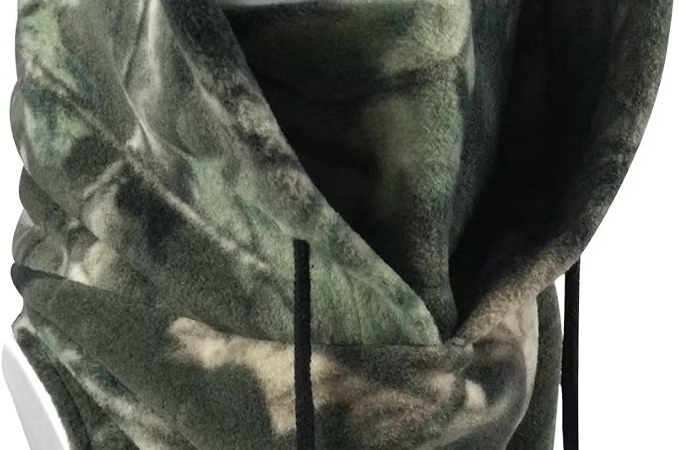
The Your Choice Hunting Face Mask Camo Balaclava is a lightweight head-and-face covering designed for outdoor activities. The product is marketed for hunting as well as activities such as snowboarding and other recreational situations where additional coverage may be useful. Its camouflage appearance gives it an outdoor-oriented style, while the balaclava design provides coverage across areas such as the head, face, and neck.
A balaclava is different from a conventional scarf or neck gaiter because it is designed to stay positioned around the head and face. Depending on how it is worn, it can provide coverage around the neck and portions of the face while leaving the eyes and other areas unobstructed.
Although camouflage is commonly associated with hunting clothing, the underlying design of a face mask can also have practical applications outside hunting. Winter recreation, hiking, camping, cycling, outdoor work, and other cold-weather activities may involve conditions where covering the face and neck is useful.
At the same time, a face covering should be selected according to the activity and weather conditions rather than simply its appearance. Breathability, fit, visibility, moisture management, temperature, and compatibility with other equipment can all affect comfort.
This guide examines the practical characteristics of the Your Choice balaclava, explains potential uses, discusses important considerations, and compares several general categories of outdoor face coverings. The goal is to provide useful information for understanding where this type of product may fit into an outdoor clothing system.
Key Features
Balaclava-Style Coverage
The defining feature of this product is its balaclava-style construction.
Unlike a standard hat, a balaclava is designed to cover more of the head and neck. Depending on the way it is positioned, it can also cover portions of the face.
This additional coverage can be useful when outdoor conditions expose the wearer to cold air or wind. Keeping the neck and surrounding areas covered can make a noticeable difference in perceived comfort, particularly when temperatures are low.
The exact amount of coverage depends on the design and how the wearer positions the mask.
Camouflage Pattern
The product features a camouflage-oriented appearance.
Camouflage patterns are commonly found in outdoor clothing, particularly hunting and recreational gear. In addition to its association with outdoor activities, camouflage can simply be a preferred visual style for people who enjoy nature-oriented clothing.
The presence of a camouflage pattern should not be interpreted as a guarantee of concealment or invisibility in an outdoor environment. Real-world visibility depends on lighting, surroundings, movement, clothing, distance, and many other factors.
For general outdoor use, the pattern can simply be viewed as part of the product’s aesthetic design.
Head, Face, and Neck Coverage
A balaclava can provide more coverage than many ordinary winter accessories.
A conventional beanie primarily covers the head, while a scarf or neck gaiter primarily covers the neck. A balaclava combines aspects of both approaches into one wearable piece.
This can reduce the number of separate accessories needed during an outdoor trip.
For example, someone preparing for a cold-weather hike may prefer one head-and-neck covering rather than carrying a hat and separate neck accessory.
Lightweight Outdoor Accessory
A lightweight face covering can be convenient to carry.
It can be folded or compressed into a pocket, backpack compartment, or outdoor gear bag when it is not needed.
This portability is useful when weather conditions are uncertain. A person may start an activity in relatively mild conditions and later encounter colder temperatures or stronger wind.
Having a compact additional layer available can provide flexibility without requiring substantial storage space.
Versatile Outdoor Design
Although the product is associated with hunting, its general design can be relevant to several outdoor activities.
The same basic need for face and neck coverage can occur during:
- Hiking
- Camping
- Snowboarding
- Skiing
- Cycling
- Outdoor work
- Winter walks
- Fishing
- Recreational outdoor activities
- Travel in cold climates
The suitability of the balaclava for any particular activity depends on weather conditions and whether the face covering interferes with other required equipment.
How It Can Be Used
Hunting and Outdoor Recreation
A camouflage balaclava may be incorporated into outdoor clothing during hunting activities.
From a clothing perspective, its primary functions are head and face coverage, protection from environmental conditions, and integration with other outdoor garments.
When participating in hunting, users should follow applicable local laws, land-use rules, safety requirements, and visibility requirements. In some environments, regulations may require specific colors or visibility accessories for hunters.
The balaclava should therefore be treated as one clothing layer rather than a substitute for required safety equipment.
Cold-Weather Hiking
Hiking in cold weather often involves exposure to wind and low temperatures.
A hat can protect the head, while a scarf or neck gaiter can protect the neck. A balaclava combines these functions and can also provide additional facial coverage.
This can be convenient when the weather changes during a hike. The face covering can be adjusted or removed depending on the conditions and the user’s comfort.
Snowboarding
Snowboarding involves exposure to cold air and wind, particularly during downhill movement.
A balaclava can be worn underneath other winter equipment to provide additional coverage around the head and neck.
However, compatibility is important. The mask should not interfere with goggles, helmets, or other protective equipment.
A proper helmet fit should always take priority over adding an unnecessary clothing layer underneath it.
Skiing
Skiers may also use face coverings during cold-weather activities.
A balaclava can provide additional coverage around the face and neck, particularly on windy days.
As with snowboarding, the user should make sure the face covering does not interfere with helmet fit, goggles, visibility, or breathing.
Camping
A lightweight balaclava can be included in a camping gear kit even when it is not needed continuously.
Temperatures can drop significantly after sunset, particularly in areas with clear skies or elevated terrain. A compact face covering can therefore serve as an additional clothing layer.
It can be stored in a jacket pocket or backpack until conditions become colder.
Cycling
Cold-weather cyclists sometimes need additional coverage around the face and neck.
A balaclava may be worn underneath a cycling helmet if the fit allows sufficient space and the manufacturer permits the combination.
Care is important because anything placed underneath a helmet can affect how the helmet sits on the head. The helmet should remain correctly positioned and securely fitted.
Outdoor Work
People who work outdoors during colder months may find head and neck coverage useful.
A lightweight balaclava can be combined with a jacket, gloves, and other weather-appropriate clothing.
For physically demanding work, breathability becomes particularly important because heat and moisture can accumulate quickly.
Who It May Be Suitable For
Outdoor Enthusiasts
People who regularly participate in outdoor activities may appreciate having a compact face covering available.
A balaclava can be stored with other gear and used when weather conditions become less comfortable.
Winter Sports Participants
Skiers, snowboarders, and other winter sports participants may find a balaclava useful as an additional clothing layer.
The key consideration is whether it fits comfortably beneath existing protective equipment.
Campers and Hikers
Cold-weather campers and hikers can use a face covering as part of a broader layering system.
Because a balaclava is relatively small compared with a larger winter garment, it can be easy to include in a backpack.
Hunters
The camouflage appearance and outdoor-oriented design make this type of product relevant to hunters.
However, hunters should always check local regulations concerning clothing colors, visibility requirements, and hunting safety before selecting outdoor apparel.
People Traveling in Cold Weather
A compact balaclava can also be useful for travel.
It can be packed into luggage without requiring much space and taken out when temperatures drop.
This may be useful for winter vacations, mountain destinations, outdoor sightseeing, or other situations involving prolonged exposure to cold weather.
Important Things to Consider
Check the Fit
A face covering should fit securely without creating excessive pressure.
If it is too loose, it may shift during movement. If it is too tight, it can become uncomfortable, particularly when worn for several hours.
Before using a balaclava during a long outdoor activity, it is useful to determine whether the fit remains comfortable during movement.
Consider Breathing Comfort
A face covering sits close to the nose and mouth, so breathability is an important consideration.
During strenuous activities, breathing rate increases and moisture can accumulate inside the fabric.
A material that feels comfortable during a relaxed walk may feel different during intense exercise.
Users should avoid wearing a face covering in a way that obstructs normal breathing.
Think About Temperature
Not every outdoor situation requires a full face covering.
In moderate weather, a balaclava may feel unnecessarily warm, especially during strenuous activity.
Layering allows the user to adapt to changing conditions. A face covering can be carried as an additional layer rather than worn continuously.
Consider Moisture
Condensation and perspiration can accumulate around the mouth and nose.
In cold weather, moisture can make fabric feel damp and uncomfortable.
If the face covering becomes wet, it should be allowed to dry according to its care instructions.
Check Helmet Compatibility
Anyone using a balaclava with a helmet should pay particular attention to fit.
The face covering should not cause the helmet to sit incorrectly or reduce its ability to provide appropriate protection.
This is particularly relevant for skiing, snowboarding, cycling, climbing, and other activities where helmets are used.
If adding a layer changes the helmet fit substantially, the combination should be reconsidered.
Consider Goggles and Eyewear
Winter sports often involve goggles.
A balaclava can sometimes affect how goggles sit against the face, particularly around the nose and cheeks.
An improperly positioned face covering can also contribute to discomfort or fogging.
Users should test the combination before relying on it during a longer trip.
Visibility and Safety Requirements
A camouflage pattern can be appropriate for certain outdoor activities but may be unsuitable where high visibility is required.
Some outdoor environments, roads, work sites, and hunting areas have specific visibility considerations.
Before using camouflage clothing, check whether the activity or location has requirements concerning visible colors or safety garments.
Follow Care Instructions
Outdoor clothing can accumulate sweat, dirt, dust, and moisture.
Following the manufacturer’s washing and drying instructions helps maintain the fabric and fit.
Avoid assuming that every synthetic face covering should be washed using identical methods. The product’s own care instructions should take priority.
Comparing General Categories of Outdoor Face Coverings
Different face-covering designs provide different combinations of coverage, warmth, breathability, and versatility.
Balaclavas
Balaclavas cover the head and neck and can also cover portions of the face.
They are useful when extensive coverage is desired and are often associated with winter sports, hunting clothing, hiking, and cold-weather outdoor activities.
Their main consideration is that they may provide more coverage than necessary in mild weather.
Neck Gaiters
A neck gaiter is generally a tube-shaped fabric accessory worn around the neck.
It can often be pulled upward over the lower face or downward around the neck.
This gives the wearer flexibility, particularly when weather conditions change.
Compared with a full balaclava, a neck gaiter usually leaves more of the head uncovered.
Winter Hats
Winter hats primarily cover the head.
They are often simpler to wear and may be more comfortable when facial coverage is unnecessary.
However, they do not provide the same neck and facial coverage as a balaclava.
Scarves
Scarves can provide adjustable neck and face coverage.
Their flexible design allows the wearer to change how much of the face is covered.
The trade-off is that scarves can be less integrated than a fitted balaclava and may shift during movement.
Face Masks Designed for Sports
Some sports-oriented face coverings focus primarily on breathability and moisture management.
They may be designed for running, cycling, skiing, or other active pursuits.
When selecting one, users should consider whether the primary requirement is warmth, airflow, moisture management, or protection from wind.
Using a Balaclava as Part of a Layering System
A balaclava generally works best as one component of a broader clothing system.
Base Layer
A moisture-managing base layer can help keep sweat away from the skin during physical activity.
Insulating Layer
An insulating jacket or fleece can provide additional warmth around the torso.
Outer Layer
A weather-resistant outer layer can help protect against wind and precipitation.
Head and Face Layer
The balaclava can provide additional coverage around the head, face, and neck.
Hands and Feet
Gloves, socks, and appropriate footwear are equally important when spending extended periods outdoors in cold conditions.
This layered approach allows the wearer to adjust individual pieces rather than relying on one garment for all weather protection.
Practical Tips for Outdoor Use
A few habits can make a face covering more convenient.
First, carry it even if you do not expect to need it. Weather can change, especially in mountainous or exposed environments.
Second, keep it dry whenever possible. A damp face covering can become uncomfortable in cold weather.
Third, avoid covering the face so tightly that breathing becomes difficult.
Fourth, check the fit of the face covering together with goggles, helmets, glasses, or other equipment before beginning an activity.
Finally, follow local rules when using camouflage clothing for hunting or other regulated outdoor activities.
Frequently Asked Questions
What is a balaclava?
A balaclava is a head-and-face covering designed to cover the head, neck, and portions of the face. Depending on its design and how it is worn, the eyes may remain uncovered while other facial areas are protected from the elements.
What can the Your Choice Hunting Face Mask be used for?
The product is marketed for hunting and outdoor activities and can also be relevant to cold-weather recreation such as hiking, camping, skiing, snowboarding, and other outdoor activities where head and face coverage is useful.
Is a camouflage balaclava only for hunting?
No. Although camouflage patterns are strongly associated with hunting and outdoor gear, the underlying balaclava design can also be used for winter recreation, hiking, camping, cycling, and other outdoor activities.
Can a balaclava be worn under a helmet?
It may be possible, depending on the helmet and balaclava combination. The important consideration is maintaining the helmet’s correct fit and positioning. If the additional layer causes the helmet to sit incorrectly or become loose, the combination should not be used that way.
Can it be used for snowboarding?
A balaclava can be used as a cold-weather clothing layer during snowboarding. Users should ensure that it does not interfere with the helmet, goggles, visibility, or comfortable breathing.
Is a balaclava suitable for hiking?
It can be useful for hiking in colder conditions, especially when wind exposure makes the face and neck uncomfortable. During warmer or strenuous hikes, however, a lighter or less extensive covering may be more appropriate.
Does camouflage guarantee concealment?
No. A camouflage pattern does not guarantee that a person will be difficult to see. Visibility depends on many factors, including the surrounding environment, lighting, movement, distance, and clothing.
Can a balaclava replace a winter hat?
It can provide head coverage while also covering additional areas of the face and neck. Whether it can replace a separate winter hat depends on personal preference, weather conditions, and the rest of the clothing system.
Can children use a balaclava?
Children can use appropriately sized outdoor clothing designed for them, but fit, breathing comfort, visibility, and supervision should be considered carefully. The specific product’s sizing information should be checked before use.
How should a balaclava be cleaned?
Cleaning should follow the manufacturer’s care instructions. The correct washing and drying method can depend on the fabric and construction.
Is a balaclava useful in mild weather?
It may be unnecessary in mild conditions. Because it covers multiple areas of the head and face, it can become warm during physical activity. It is generally more useful when additional coverage is actually needed.
Conclusion
The Your Choice Hunting Face Mask Camo Balaclava is designed as a compact outdoor head and face covering that can fit into a variety of cold-weather clothing systems.
Its camouflage styling makes it naturally relevant to hunting-oriented outdoor apparel, while the basic balaclava design can also be useful for hiking, camping, snowboarding, skiing, cycling, outdoor work, and winter travel.
The most important factors to consider are not simply the appearance of the product but how it fits, how breathable it is during activity, how it interacts with other equipment, and whether its level of coverage matches the weather.
For winter sports, compatibility with helmets and goggles is particularly important. For hunting, users should follow local regulations and safety requirements, including any rules concerning visibility. For hiking and camping, the balaclava can be treated as an additional layer that can be added or removed as conditions change.
A face covering is ultimately one small component of an outdoor clothing system. Appropriate base layers, insulation, weather protection, footwear, gloves, and activity-specific safety equipment remain important for anyone spending extended time outdoors.
For people looking for a lightweight camouflage-style balaclava for outdoor recreation or cold-weather activities, understanding these practical considerations can help determine whether this type of head and face covering fits their needs.